Objects from the Oxford University Herbaria
Discover exciting objects on loan in the temporary exhibition room.
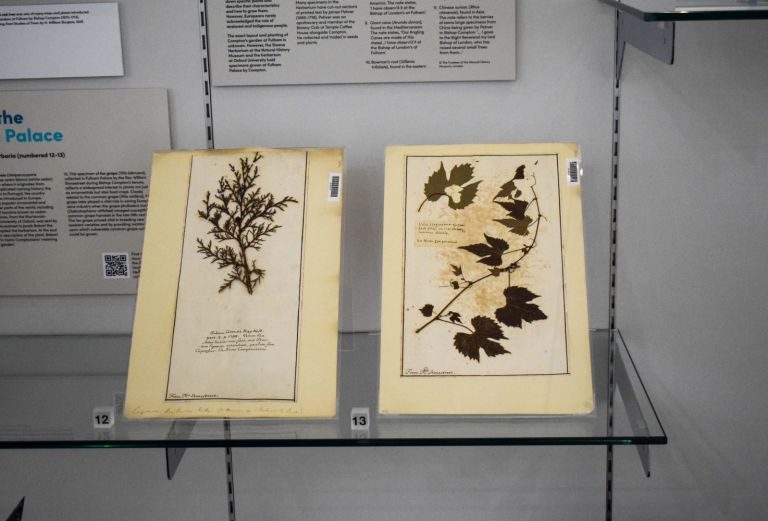
Thanks to a partnership with Oxford University, we are able to display dried plants (herbarium specimens) and drawings related to the period when Henry Compton (Bishop of London 1675 – 1713) was growing over 1,000 plant species from around the world at Fulham Palace. The plant specimens are from the Du Bois Herbarium.
The Du Bois Herbarium specimens
The Du Bois Herbarium was created by Charles Du Bois (1658 – 1740). Funded by his activities as treasurer of the East India Company, Du Bois became a patron of botanical collectors in the Americas, south Asia and southeast Asia. He raised plants in his garden in Mitcham, Surrey from seeds imported from around the world. His collection of dried plants consists of 13,000 specimens, and includes material collected at Fulham Palace.
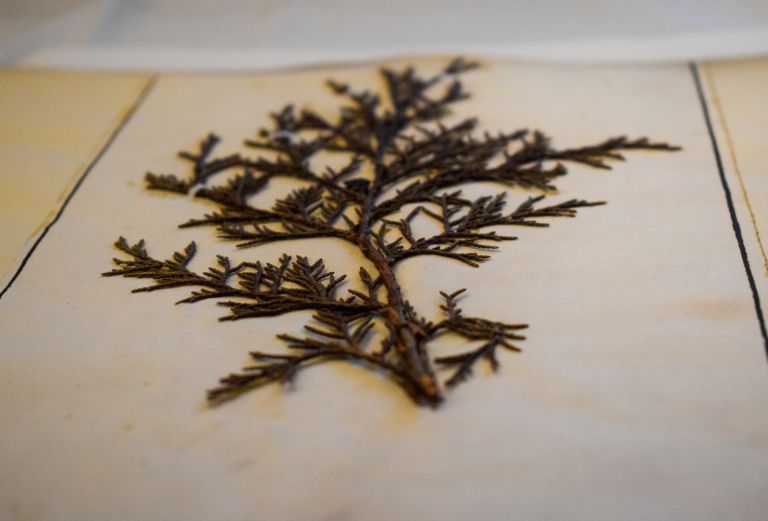
Mexican cypress
(OXF-DB-10201)
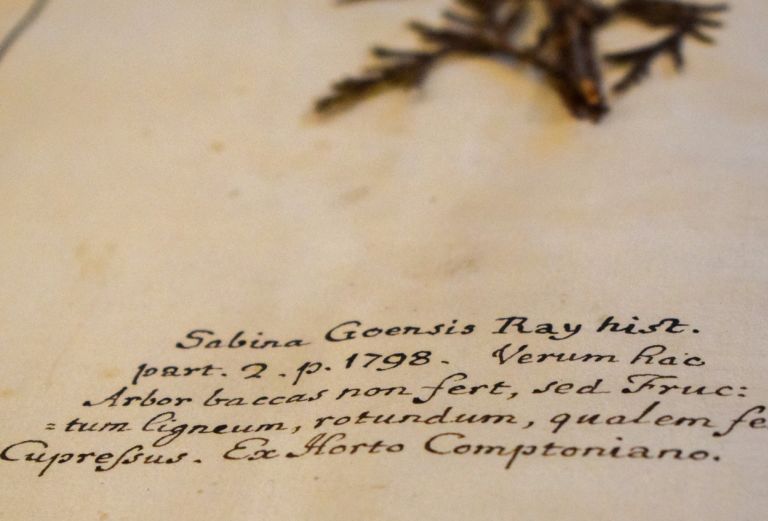
The Mexican cypress (Hesperocyparis lusitanica) is known as cedro blanco (white cedar) or teotlate in Mexico where it originates from. This plant has a complicated naming history; the lusitanica part refers to Portugal, the country through which it was introduced to Europe. It rapidly became a popular ornamental and forestry tree in other parts of the world, including South Asia where it became known as cedar-of-Goa. This specimen, from the Morisonian Herbarium at the University of Oxford, was sent by the Rev. William Stonestreet to Jacob Bobart the Younger, who compiled the herbarium. At the end of the handwritten description of the plant, Bobart has commented ‘in Horto Comptoniano’ meaning ‘from Compton’s garden’.

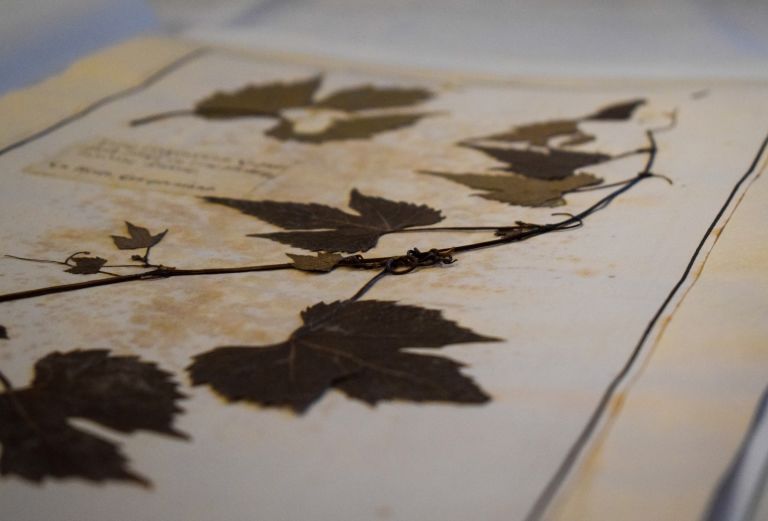
Fox grape
(OXF-DB-11745)
This specimen of fox grape (Vitis labrusca), collected in Fulham Palace by the Rev. William Stonestreet during Bishop Compton’s tenure, reflects a widespread interest in plants not just ornamentals but also food crops. Closely related to the common graph (Vitis vinifera), fox grape later played a vital role in saving Europe’s wine industry when the grape phylloxera insect (Daktulosphaira vitifoliae) ravaged susceptible common grape harvests in the late 19th century. The fox grape proved vital in breeding new resistant varieties and by providing rootstocks upon which vulnerable common grape cultivars could be grown.
Visit the museum to learn more and see these interesting specimens for yourself!
