Written by author and historian Nicole Brown.
Joins us for a free talk on Thursday 15 January 2026 exploring the complex legacy of the Associates of Dr. Bray and their connection to the Bishop of London.
Drawing on research from the collections of the Bodleian and Lambeth Palace Library undertaken as part of her PhD in American Studies at William & Mary College Virginia, Nicole’s talk focuses on recentring the lives of the Black children educated in the Bray schools during the 18th century. By shedding light on voices often excluded from the archive, she invites audiences to consider how historic collections can support contemporary work in social justice and historical recovery.
In this blog, Nicole provides some historical background on the Church of England’s record of education for Black students in the Bray schools, and the resistance of some of these children to the teaching methods and curriculum they were faced with.
Content warning: some of the language used in the historic texts quoted below is heavily racialised and offensive.
When most people think about Black education in the United States, the Church of England is not the first organisation which comes to mind. Yet some of the most comprehensive information available to scholars, the public, and descendants on formalised educational opportunities for those of African descent in colonial America come from Anglican archives. These sources offer us a glimpse into the lives of scholars who attended Anglican charity schools sponsored in place such as Virginia, Pennsylvania, South Carolina and New York in the years leading up to the American Revolution.
These records also illuminate the troubling relationship between the Church of England and Black education in the British Atlantic World. Many charitable organisations sponsored by the Church of England in the 1700s exclusively offered pro-slavery instructions to their Black students. While instruction at these institutions was often the only formalised education available to Black children, the intention behind the education was to reinforce subservience and submission amongst the student populace. Pro-slavery instruction was offered to Black students regardless of whether these children were enslaved or free and irrespective of the school being located in a southern or northern British colony. From the thousands of pages of records I have reviewed in archives across the United Kingdom, it is apparent that the intention behind most Black education in the Anglican Empire was to reinforce a racial hierarchy through religious teachings.
One of the most obvious examples of this reality exists in the records of the Associates of Dr. Bray. Founded in 1724 by the Rev. Dr. Thomas Bray, the organisation eventually began sponsoring schools for Black children in the 1750s. Bray was also a confidant and contemporary of Bishop Edmund Gibson, who served as the Bishop of London between 1724 and 1748. Their correspondence in the 1720s highlights a mutual interest in expanding the Church of England across the British Empire, as well as the importance of British North American colonies to accomplish this mission.
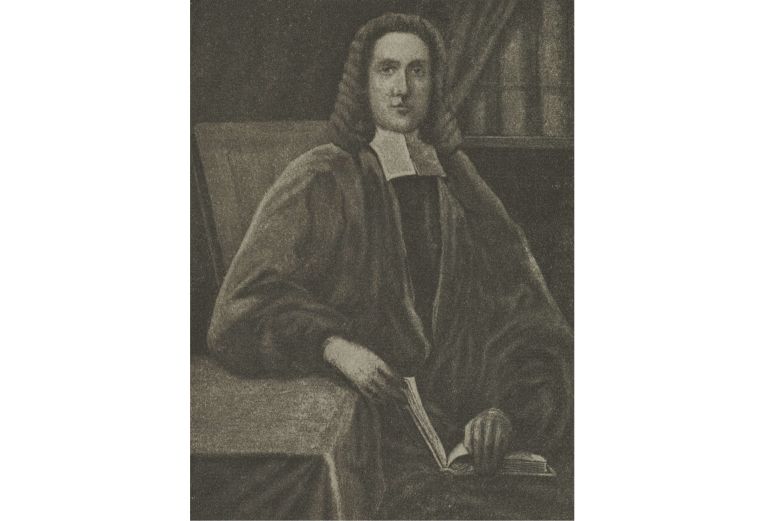
While Rev. Dr. Thomas Bray did not live to see formalised schools for Black children realised, his belief that this institution might instruct “the British Negros in the Principles of the Christian Religion” was clear from the earliest meeting minutes of the organisation. A frequently used textbook at Bray Schools perhaps states their intention for this instruction more bluntly:
Consider, I Say, that what Faults you are guilty of towards your Masters and Mistresses, are Faults done again GOD himself, who hath set our Masters and Mistresses over you, in his own Stead, and expects that you will do for them, just as you would do for HIM.
Rev. Thomas Bacon, Two Sermons, Preached to a Congregation of Black Slaves, at the Parish Church of S.P. In the Province of Maryland (London: John Oliver, 1749), 30.
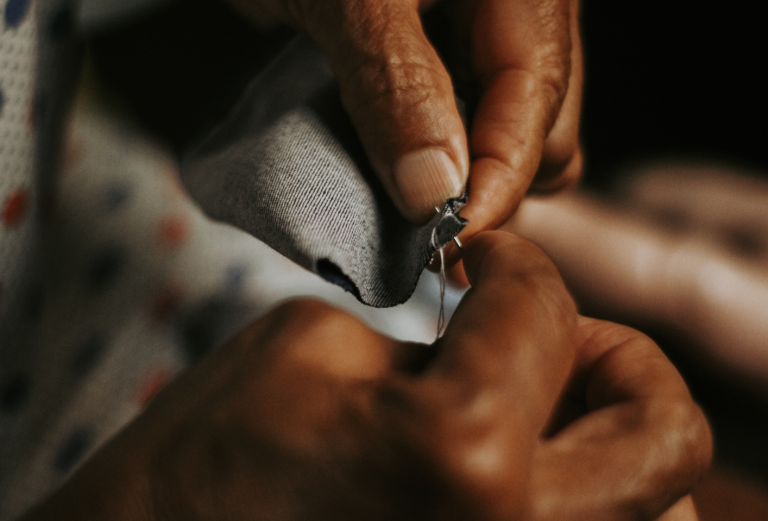
With student populations that were majority enslaved, Bray Schools began to appear in places such as Williamsburg, Philadelphia and New York City (the colonial capitals of Virginia, Pennsylvania and New York, respectively). Instruction at these schools included reading, spelling, writing, skilled needlework and basic arithmetic, as well as core doctrinal teachings associated with the eighteenth-century Church of England. While all schools were administered via elite, white gentlemen, daily operations within the schools themselves were coordinated by white, female teachers.
It is interesting that many 18th century Bray Schools ended up being in cities intimately linked to ideas of freedom and revolution in the decades after their founding. With the advent of the American Revolution, all British North America Bray Schools ceased operations by 1777; only one of these schools (in Philadelphia) would eventually be reopened in 1786. Perhaps this connection between revolutionary cities and Black education has more to do with the students, rather than the organisations. Indeed, I would argue that this is likely the case. It has become apparent in my research that a school’s intention, versus a scholar’s use of their schooling, are not necessarily synonymous.
Let us consider an example from the Williamsburg Bray School. Located in Virginia’s colonial capital, this school operated in a majority-Black city where enslavement and the institution of slavery was apparent in all spaces and places which a traveller might encounter. According to one of the longest-serving trustees of the Williamsburg Bray School, Robert Carter Nicholas, the scholars were not necessarily engaging with classroom materials utilised by the Associates of Dr. Bray in ways either expected or desired. Nicholas states:
I have a Negro girl in my Family, who was taught at this School upward of three Years & made as good a Progress as most; but she turns out a sad Jade, notwithstanding all we can do to reform her.
Robert Carter Nicholas, 'Letter to Rev. John Waring', December 27, 1765, Papers of the USPG, Bodleian Libraries, University of Oxford
Cross-referencing this mention of a “Negro girl” with other Williamsburg Bray School records, it was likely that her name was Hannah. Hannah first began attending the Williamsburg Bray School when she was seven years old in 1762. No records of what she thought of her instruction, nor her later life, have yet been located.
What Hannah’s transgressions were, we do not know. However, it is clear from this fleeting reference that her resistance – for indeed, one can argue that refusing to comply with “reformative” classroom instruction was resistance – irritated her enslaver enough that he chose to complain about it to the Bray Associates themselves, a group of men he had never actually met in person.

It is the relationship between Black resistance and educational instruction offered via Anglican Charity schools that forms the nexus for my research. Between these seemingly paradoxical topics lie important and necessary research related to childhood, revolution and the British Atlantic World. It is only through careful analysis of records which sometimes fleetingly mention scholars such as Hannah that the relationship between Black agency and religious control can be deeply studied. I hope you will join me on Thursday 15 January, the 302nd anniversary of the founding of the Associates of Dr. Bray, to explore the personal stories of Black education that lie within the records of this significant colonial organisation.
About the Author
Nicole Brown is an award-winning author, living history expert, and PhD Candidate in American Studies at William & Mary College Virginia; she is currently the Historian for the Thomas Jefferson Foundation’s Robert H. Smith International Center for Jefferson Studies.
Her ongoing research analyses Black literacy in the Atlantic World via interdisciplinary and descendant-engaged scholarship. Brown’s work as a museum professional has taken her across the globe, presenting on interpretive techniques for “hard” histories at museums and historic sites in the United States. Brown recently co-edited a book entitled The Williamsburg Bray School, 1760-1774: A History Through Records, Reflections, and Rediscovery.

Article sources
Papers of the United Society for the Propagation of the Gospel (USPG), Papers related to ‘Dr. Bray’s Associates (1729-1940), Bodleian Libraries, University of Oxford
“Minutes of the Meetings of the ‘Associates of Mr. D’allone’s Charity,” 1729-1735, F1a, 6, Papers of the United Society for the Propagation of the Gospel (USPG), Papers related to ‘Dr. Bray’s Associates (1729-1940), Bodleian Libraries, University of Oxford
Rev. Thomas Bacon, Two Sermons, Preached to a Congregation of Black Slaves, at the Parish Church of S.P. In the Province of Maryland (London: John Oliver, 1749), 30
Robert Carter Nicholas, “Letter to Rev. John Waring,” December 27, 1765, North American Files, Vol. 1, f. 2, Papers of the United Society for the Propagation of the Gospel (USPG), Papers related to ‘Dr. Bray’s Associates (1729-1940), Bodleian Libraries, University of Oxford
Robert Carter Nicholas and Rev. William Yates, “[Enclosure]: A List of Negro Children at the School established by the Associate of the late Reverend Doctr. Bray,” September 30, 1762, North American Files, Vol. 1, f. 2, Papers of the United Society for the Propagation of the Gospel (USPG), Papers related to ‘Dr. Bray’s Associates (1729-1940), Bodleian Libraries, University of Oxford