By garden apprentice Ezra Hicks
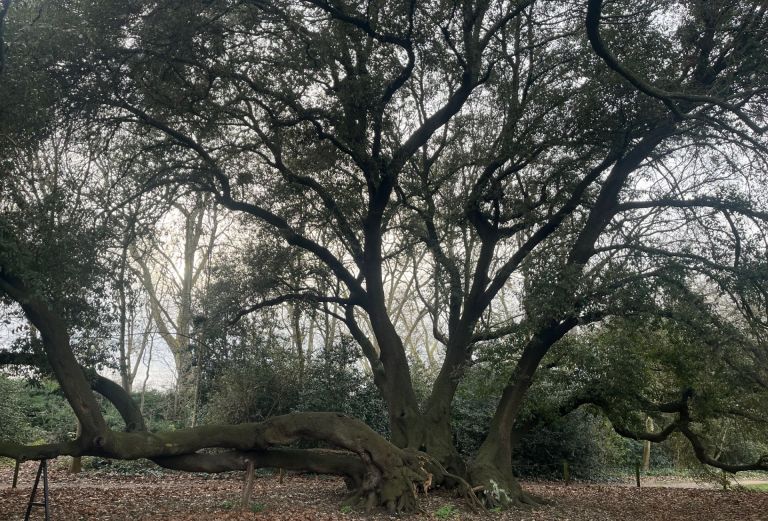
Holm oak bark scale, Nidularia pulvinata, is a scale insect native to the Mediterranean region which has recently made its way over to the United Kingdom. It is mainly found on Holm oak, or Quercus ilex, which is a concern for Fulham Palace as we have a large Holm oak population including an impressive 500 year old specimen we are lucky to have on the grounds. The bark scale insect doesn’t just target the Holm oak, however. It has been found on two other oak species in the UK, the kermes oak, Quercus coccifera and the Mount Tabor oak, Quercus ithaburensis.
There is a possibility the Holm oak bark scale could also affect Quercus x crenata ‘Fulhamensis’. Commonly known as the Fulham oak, this is an important species at Fulham Palace, having been locally raised at Osborne’s Nursery, Fulham, around the year 1760. We have a specimen of the Fulham oak growing on site, which was commissioned to be planted in 1988 by the Mayor of Hammersmith and Fulham at the time, Joseph Mirwitch.
Like some of the other oak species targeted by the bark scale, the Fulham oak is an evergreen oak. Despite this, the insect has not been found on either of its parent plants – the Turkey oak, Quercus cerris and the cork oak, Quercus suber. This is a positive sign, especially as we have both of these oak species growing here at the Palace, with the cork oak having been cultivated here as early as the 17th century by the resident Bishop Compton. In addition to this, our two native oak species, the English oak, Quercus robur and sessile oak, Quercus petraea are also widely ignored by the bark scale.
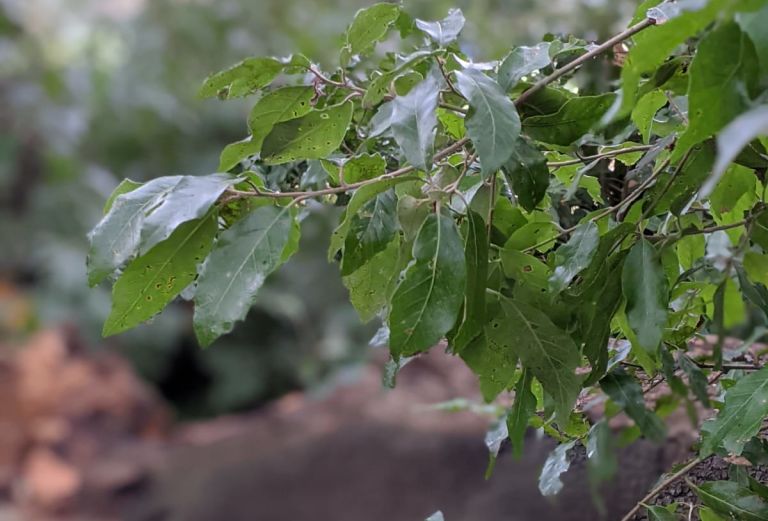
The Holm oak bark scale insect feeds on the sap of oak trees and can be of great detriment to heavily stressed trees, in some cases proving a deadly parasite. The scale is not widespread in the UK and until recently was only found in France, Italy, Portugal, Spain, Turkey, Algeria and China. Unfortunately it has now made its way to London, where it has been found at a number of sites and is believed to have been present at Brompton Cemetery for many years.
The Holm oaks at Brompton Cemetery have particularly suffered with the pest as they are already in a stressful environment. Due to the architecture and planning of the cemetery, lots of the trees are overcrowded and competing for basic needs such as light and water. This has resulted in Holm oak bark scale severely stunting the growth of the trees present there and in some cases killing them. In response to this pest, Brompton Cemetery have made the sad but logical decision to have all their Holm oak specimens removed and the material burnt. Hopefully this action will slow the spread of the insect and give the remaining trees in the cemetery more space, light and water.

Now onto the important part – how to identify Holm oak bark scale! The easiest way to hunt down Holm oak bark scale is by finding the white egg sacs of the female scale insect, which are present in cracks in the bark of affected trees.
The garden and tree surveyor team at Fulham Palace are carefully monitoring the Holm oaks we have on site and to date we don’t believe the pest is present. With Brompton Cemetery being so close at only 1.7 miles away, we are bracing ourselves for the possibility of its arrival. If the bark scale does appear at the Palace, then early detection will be key.
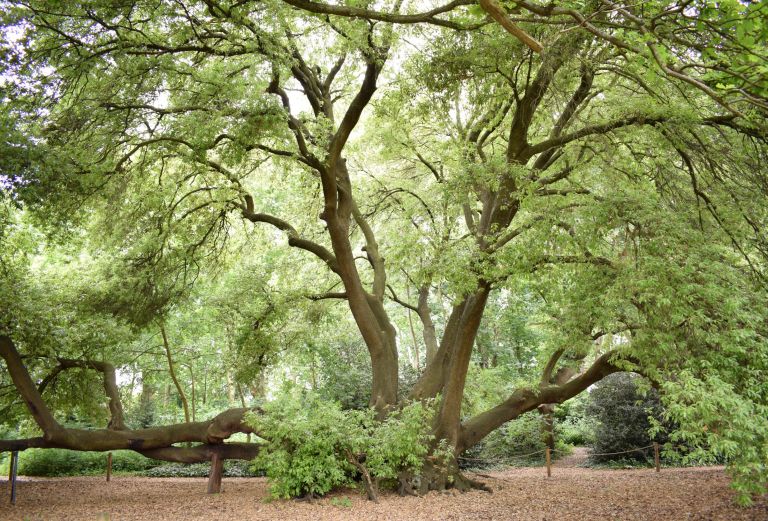
Our oldest and dearest Holm oak has been looked after here for half a millennium and we are doing everything we can to take care of it in its advanced age. 14 years ago we roped off the area around it to reduce root compaction from pedestrian foot traffic. Soil compaction can be extremely damaging to tree health as it prevents roots from taking up the oxygen that is needed for respiration, a process similar to breathing in trees.
We are also looking into giving our Holm oak more canopy space and we are even considering reducing its sycamore neighbours to allow for better light and air flow. Hopefully, with this care and a bit of good luck we can help it survive and thrive for another 500 years!