
An interview with Dr Joseph Yannielli and Kate Kern.
Dr Joseph Yannielli sat down with our learning and engagement manager Kate Kern to discuss his research and his upcoming talk at Fulham Palace on 22 May 2026 – Britain’s first Black diplomat: the family behind the history.
Q: You have worked at institutions like Princeton University and the Gilder Lehrman Center for the Study of Slavery, Resistance and Abolition. How have these experiences shaped your approach to history?
[Dr Yannielli] I’ve been very fortunate to have the opportunity to work with the amazing scholars and historians both at Yale and at Princeton and elsewhere in the US, which is where I’m from originally, before I moved here to the UK. I would say the most interesting part of working at those institutions was the students.
I was lucky enough to be able to teach some classes about slavery and abolition at Yale and Princeton, first as a graduate student and then later as a post-doctoral researcher. It was really wonderful to be able to draw on the enthusiasm and the talent of those students, who were passionate about the material and had a lot of great original insights to share. We collaborated on some projects, like the Princeton and Slavery Project, that I hope will advance scholarship and dialogue and engage a global audience. I should add that my students at Aston are equally impressive and talented. Last year, our programme was ranked 8th in the UK for History. I love working with Aston students, and they’ve brought a whole new perspective to my work!
Q: Your current book project explores the aftermath of the Amistad Rebellion. How did that research lead you to the story of the Hanson family?
[Dr Yannielli] Augustus Hanson was involved in the trial of the Amistad survivors when they first landed in the United States in New York and Connecticut in 1839 and he was one of the translators recruited to help interpret testimony from the Amistad survivors in court. Now, Hanson didn’t speak Mende perfectly, I don’t think, at that point, but he had a very broad knowledge of African languages and dialects. I think he was able to help in the interpretation process, along with a couple of other African abolitionists who were recruited to help in that process. This is the story that’s told in Steven Spielberg’s movie, Amistad.
Later on, Hanson became involved in the Mendi Mission because he was already involved in the abolitionist movement. He was working as a member of the Underground Railroad, part of the New York Committee of Vigilance with David Ruggles, who is a very well-known abolitionist freedom fighter. He had contact with William Lloyd Garrison and James Pennington and all these leading abolitionist figures in the US. He was really politically active at this time. So, when it came time to send the Amistad survivors back to Africa after they won their case in the US Supreme Court, he was ready.
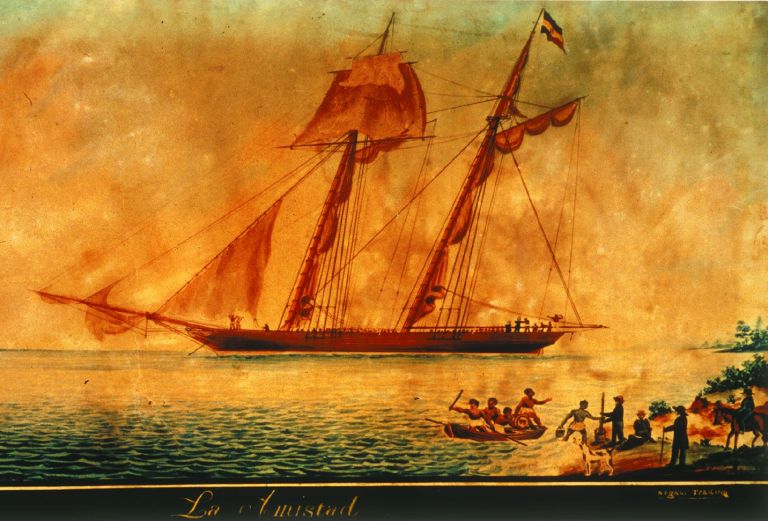
There’s been a lot of, you know, books and novels and stuff written about the Amistad case—but not a lot written about what happened in the decades that followed. That is where Hanson really comes into the frame because he is involved in establishing the Mendi Mission.
The Mendi Mission was a collaborative project between the abolitionist movement in America and the Amistad Africans who set up an outpost of the Underground Railroad in Africa in what’s now the southern part of Sierra Leone. At that time, it was known as the Sherbro region of West Africa. Hanson was involved in setting the agenda for the mission and fundraising for the return of the Amistad captives. He travelled up and down the eastern seaboard, for example, collecting money from subscribers and donations to help support the Mendi Mission. Hanson was very engaged in that project and later, after he became ordained as an Episcopal priest, he met the Bishop of London and he had this whole other life as a Colonial Office appointee and a civil servant working for the British Government. Hanson becomes the first person of African descent to work for the Foreign Office. Towards the end of his career in the 1850s, he then returns to the Mendi Mission, and he works very closely with the abolitionist missionaries there as part of that project.

My PhD dissertation was on the Mendi Mission and as part of that process, I researched the biographies of all the prominent individuals who were involved with the mission and there were dozens and dozens of them. This took a very long time, as you might imagine! Some of the individuals were easier to research than others, but Hanson was a real challenge because there’s so little information available about him. His life is almost scrubbed from the history books, so I had to really embark on a detective trail to try to uncover exactly what was going on with him. It’s taken years to get a handle on it and his life turned out to be so complex, so rich and stunning in all of its detail, that I can’t help but be drawn to it.
Q: You describe Augustus Hanson as Britain’s first black diplomat. What do we miss when we focus only on that achievement?
[Dr Yannielli] I should probably qualify this because my friends at the Foreign, Commonwealth and Development Office would be quick to point out that technically Hanson wasn’t a diplomat. The diplomatic service was separate from the consular service before 1943. Hanson was the first British consul to the Republic of Liberia. I would argue that there is a lot less difference between the positions of ambassador and consul on the ground in the mid-19th century than perhaps there exists now in the 21st century. Consuls were essential to anti-slavery diplomacy. Hanson was doing things as British consul like negotiating agreements with African leaders and dealing with financial matters and intercepting slave ships, freeing the enslaved people on board. He was acting as the sole representative, as a mouthpiece really for the British government in Liberia and later in the Sherbro, at a time when no ambassador existed in those places. So, I think in a generic sense, it’s fair to refer to Hanson as the first diplomat of African descent employed by the British government.
Hanson does have a very rich career outside of his work for the Foreign Office. He was involved in the abolitionist movement, he was involved in the Underground Railroad in the United States. This is really where he gets his first experience in public.
Hanson is involved in the Amistad trials and the Mendi Mission. He has this whole ecclesiastical career before he joins the Foreign Office. That was the subject of my talk at Fulham Palace last year. I focused on his relationship with the Bishop of London and Hanson’s ordination in the Church of England and experience as a colonial chaplain in Cape Coast (modern day Ghana). Hanson was an educator and maintains an interest in African culture, language and history throughout his career. He is really a polymath, a Renaissance man who was doing all these different things. He is not just reducible to his role in the Foreign Office. It’s important to keep in mind, at the same time, that he was employed by the British government and was the first person of African descent to work for the Foreign Office which is unprecedented. People remarked on this at the time. Newspapers wrote about it, they were aware of it, that his role was very public and it was a major historical milestone.
Q: There is no image of Augustus Hanson known. How much does that intrigue you and drive you on with this research?
[Dr Yannielli] The lack of any kind of image is bizarre and has really bedevilled me for a long time. When you think about other prominent abolitionists of African descent from this period, like Frederick Douglass or Harriet Tubman, they are extensively photographed and their photographs are circulated within the movement. Douglass, it has been argued, was the most photographed American of the 19th century. Douglass spent a lot of time thinking about, writing about, speaking about the significance of photography for the black American experience and for abolitionists in particular. So the fact that we have no photographs of Hanson is really remarkable. I don’t understand what happened here because he must have been photographed, there must be something. I have this gut feeling that there is an image out there of him. We just haven’t been able to identify it yet.

The people who met Hanson remark on his appearance. He had a pretty distinctive look, and it’s interesting to think about what that look projected, because I think he thought a lot about how he presented himself to the world. All of his clothes were tailored and his look sent a message. One of my favourite descriptions of Hanson comes from an abolitionist named George Thompson. Thompson was imprisoned in Missouri, in the Western United States, for five years for his activities attempting to help enslaved individuals to freedom on the Underground Railroad. He was a radical abolitionist and he later became one of the leaders of the Mendi Mission where he met Hanson in the 1850s. I think they immediately liked each other. There’s a connection between them because they both have this similar experience from their time in the US and Thompson writes this really flattering description of Hanson:
He is highly educated – perfectly English in all his manners – wears a wig of straight hair – is a Christian and a regularly ordained clergyman of the Church of England. He is a very efficient man – the most so of any the English ever put in these parts. He is quite intimate with us and very friendly to our mission – thinks it has done and is doing much for this country.
George Thompson, Mendi Mission abolitionist, 1850s
The fact that he wears a wig of straight hair jumps right out at me because that was not typical in the middle of the 19th century. It’s really more of an 18th century thing to wear a wig unless you were a barrister in court. So, I’m very keen to find an image of Hanson. I still have my fingers crossed that I’ll be able to do this before my research is complete.
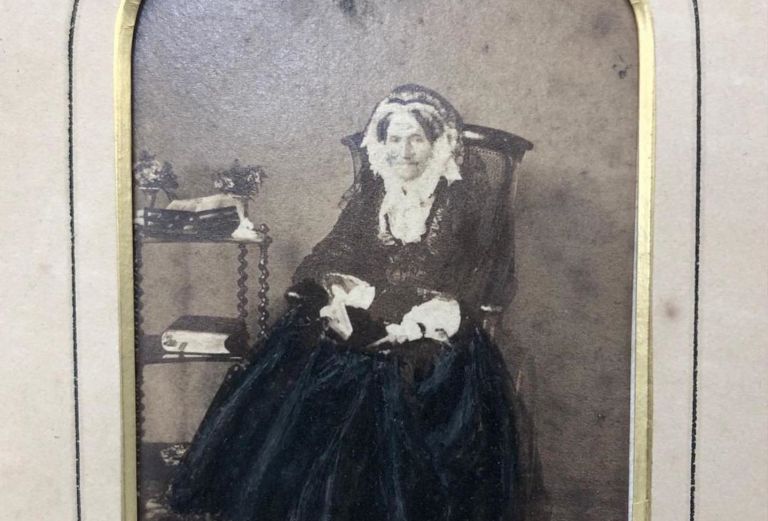
Q: Hanson’s wife, Adeline Cooper Hanson, plays a central role in your research. What makes her story particularly compelling or overlooked?
[Dr Yannielli] I think it’s important to talk about the families around these individuals. As I’ve been doing the research on Hanson and absorbed in everything that’s fascinating and important about him, I’m also an educator. I teach students here at Aston University in Birmingham and one of the things we learn about is the great man theory of history. This is the idea that history is just the biography of a small number of elite individuals, mostly men, maybe a few women thrown in for diversity. Mostly people like prime ministers, kings and queens. These are the people who supposedly move history forward. In a way, Hanson’s not one of those people because his life is so marginalised and he has been so thoroughly forgotten in the present. However I think he fancied himself a member of the British elite and he had support from people like William Wordsworth and Lord Palmerston and the Earl of Shaftesbury and the Bishop of London. He was well connected within the British upper class, a gentleman scholar, and a representative of the British government abroad.
I also teach my students about history from below, looking at the experience of ordinary people, people who have been erased or ignored in the past. I can’t help thinking — am I just perpetuating this problem of telling history as if it’s just the biography of great men? What about the people around Hanson? If Hanson himself has been marginalised and forgotten by history, what about his wife? What about his children? They are even more removed from our understanding and it’s even more difficult to get a sense of what their lives were like.
If Hanson himself has been marginalised and forgotten by history, what about his wife? What about his children? They are even more removed from our understanding and it’s even more difficult to get a sense of what their lives were like.
I asked myself, how would the story change? How would our understanding of Hanson as an individual change if we instead looked at the people around him, people like his wife, Adeline? I think her life has a lot to tell us about this time period, about the struggle against slavery and empire and racism.
Adeline came from a fairly prominent mixed-race family in Philadelphia in the United States, who were politically active. I think this probably explains in part her connection to Hanson when they meet in the early 1840s, around the time that he’s fundraising for the Amistad survivors. She then travels with him to England and to the Gold Coast (modern day Ghana) and to Liberia when he’s appointed as British Consul in Monrovia. Adeline spends a lot of time in London raising their children and I think it’s really important to look at things from her perspective, not just focus entirely on Augustus, as important as he is. I think it’s important to ask what we’re losing by just focusing on the so-called great man instead of looking at the context around him.
Q: How does looking at family networks – rather than just prominent individuals – change our understanding of abolitionist history?
[Dr Yannielli] Hanson was one of the first prominent theorists of what we now call Pan-Africanism. He develops this idea that abolitionism can’t take place just in one place. We can’t end slavery just in the United States or just in Cuba, Brazil or Angola. It has to be part of a global movement, it’s all interconnected. If we fight slavery in one place, we have to fight slavery everywhere. I think, in part, it emerges from his own family background as a transnational individual, as somebody who moves between Africa and America and Europe throughout his career and has family connections on all three of those continents.
This family context helps inspire his abolitionist politics, this pan-African abolitionism, his whole approach to how we deal with the problems of slavery, empire and race. Sociologist Paul Gilroy would later call this the Black Atlantic. Hanson is arguably one of the first people to talk about this idea, write about it and lecture about it. I think it’s really important to look at his family connections across the Atlantic Ocean on all these different continents because it informs those political commitments that he later makes.
Q: You mention newly discovered evidence from multiple countries. What was the most surprising or exciting find during your research?
[Dr Yannielli] One of the reasons why I was excited to give a talk at Fulham Palace last year, even though I’m not done with my research, is because I wanted to announce to the world that I’m interested in this person and try to find anyone else who might have any material related to his career or his family. It’s taken so many years to piece together all this information. So, I wanted to see if I could make my research a bit easier by appealing to the public and part of my rationale for giving these talks is that I want to see if there’s anything else out there. After I gave the talk at Fulham last year, somebody contacted me from the Huntingdonshire Archives, which is near Cambridge. One of Hanson’s patrons was the Lady Olivia Sparrow, who was connected to the Duke of Manchester. The family had an estate at Kimbolton Castle in Huntingdonshire, and a letter from Adeline Hanson to Lady Olivia ended up in their archive. So, they got in touch with me. This is exactly what I was hoping would happen! It’s one of the few examples we have of a piece of correspondence by Adeline Hanson. She writes this amazing letter talking about her experience being married to Augustus Hanson and asking for advice about her eldest son, who’s about to head off to Sierra Leone with his father to work there, and she talks about their relationship dynamics. I don’t want to give away too much. I want to save some details for the talk, but it’s a great discovery! I’m really grateful to Fulham Palace for hosting these talks and allowing me to get the word out about Hanson, and hopefully more material like this will come to the surface as a result.
Q: How does your research challenge or complicate traditional narratives about Britain’s role in abolition?
[Dr Yannielli] There is a lot of debate about the significance of abolitionism in Britain, and historians have traditionally been very divided on this topic. Some historians see abolitionism as a great moral triumph, and Britain as an anti-slavery nation. Britain attempted to abolish slavery within its empire and to use the Royal Navy to suppress the slave trade, spending a lot of money and lives in this endeavour. On the other hand, there are historians who argue that British abolitionism was fundamentally imperialist and racist and capitalist at its core. That it was not a moral crusade at all, but very self-serving and self-interested. The interesting thing about Hanson is that he doesn’t fit comfortably in either of those paradigms. The interpretive frameworks that historians have developed to understand abolitionism leave out Hanson. I think it’s part of the reason why we don’t hear much about him, why his story has been forgotten. On the one hand he is working for the British government and was a representative of the British Empire. He was at the leading edge of this violent, extractive imperialism, but he was also a radical abolitionist and a proponent of indigenous rights.
Hanson challenged the racism that was prevalent within the British Empire and he made the people in the Foreign Office very uncomfortable because of this. It’s part of the reason why he moves positions so frequently between the Cape Coast Castle position, the position in Liberia and the position in Sherbro. They keep moving him around because they don’t know what to do with him. He keeps causing trouble no matter where he goes. He’s an agitator, somebody who’s deeply unsettling for the British government. Part of the reason why I think we need to recover him is because he complicates the standard narrative in a really interesting way, and it helps us understand abolitionism better, because I don’t think abolitionism was just a pure moral crusade with no self-interest at all. On the other hand, I don’t think it was just about the accumulation of wealth and control over foreign territories. The answer lies somewhere in between, and Hanson helps us understand that grey area.
Q: You’re also involved in digital history projects. How can digital tools help bring stories like Hanson’s and the Hanson families to wider audiences?
[Dr Yannielli] A lot of historical discourse takes place online. When you google something related to history, usually one of the top results is Wikipedia, and that’s not an accident. Wikipedia is one of the main sources used to train all these generative AI models that are proliferating everywhere. As of right now, however, Hanson has zero presence on Wikipedia. So, the erasures and omissions in traditional scholarship get perpetuated and then magnified exponentially by AI. We have a lot of work to do to correct these artificial distortions in the historical record. It’s part of the struggle for what Joy Buolamwini calls algorithmic justice.
Wikipedia is one of the main sources used to train all these generative AI models that are proliferating everywhere. As of right now, however, Hanson has zero presence on Wikipedia. So, the erasures and omissions in traditional scholarship get perpetuated and then magnified exponentially by AI.
I mentioned the Princeton and Slavery Project, which is one attempt to do this, to try to bring professional historical scholarship into the public domain. Here you have this really important global university that had a really complicated relationship with enslavement, but also had abolitionists and anti-abolitionists on campus who were battling it out. I think that story has a lot to tell us about present day concerns. The Princeton and Slavery Project as a scholarly publication, as a database, as a digital platform, is one way of engaging in those conversations in a way that’s more public and transparent. The work of academic historians is very important, but often brilliant research can be locked down behind paywalls or formats that aren’t easily understood. Digital history is one way to make sure that our work is more accessible and open.
I’ve been doing some work in virtual reality most recently, and this is a great way to meet the public where they are and to bring history into classrooms, into museums, libraries and non-academic settings. People can put on a VR headset and experience something about the past in a way that they would not have experienced it on the written page or by reading a dense tome about that time period or that place. Digital history is a different way of experiencing history. It’s more immediate, it’s more accessible, it’s more democratic, although it’s far from perfect.
Q: How can places like Fulham Palace help us engage more meaningfully with histories of slavery, resistance and empire?
[Dr Yannielli] Augustus Hanson’s story is intrinsically connected with the story of Fulham Palace. He probably visited there. The Bishop of London, Bishop Blomfield, was writing about Hanson, writing to Hanson, and his letters are dated with Fulham Palace up at the top. The Palace is one of the few locations associated with Hanson that still exists. So, we can have a living connection to this history by talking about it here. I think the Black History 365 programme is a really great example of how we can maintain that conversation year round. It shows how historical sites can interact with the public and descendant communities and hopefully work to co-create knowledge like this.

Q: What do you find most compelling or moving about the Hanson family story?
[Dr Yannielli] One of the aspects of this story that is so tragic is that we’ve lost track of them. They have been so thoroughly written out of history or forgotten and it raises the question of why, what happened? This was very clearly a famous person who came from a famous family, who was well known in his time and celebrated for his public advocacy work and for his activism. Everybody who met him was impressed by him, but we don’t know that much about him anymore. So there’s a tragic story there – what happened to his family? It’s part of the reason why I want to focus on Hanson’s family for this talk that I’m giving at Fulham on 22 May, because I think it is part of the reason why we don’t know as much about him.
There are other famous abolitionist families, the family of Frederick Douglass, the family of Thomas Fowell Buxton and their descendants are still here and they have helped preserve and perpetuate the legacy of their ancestors. I’ve not been able to find a living descendant, a direct descendant from Hanson’s family so far and that tells a story in itself. I want to try to track what happened to his family, especially after his tragic early death in a shipwreck in 1862. What happened to his wife? Adeline went on to live for another two decades after her husband’s death. His children continued to live into the 20th century, but the trail runs cold at some point. I think that’s part of the reason why we don’t know as much about him, because we lose that living connection to his story, to his family, to his past. I want to try to recover that connection. I want to talk about his social network in America and in Africa and in England because he has important family links in all of those places.
Q: What’s next for your research after this project? Are there more hidden stories like this waiting to be uncovered?
[Dr Yannielli] There are so many. The abolitionist movement is well known. Most people know that there was an organised movement to end the slave trade and then slavery itself that really gained momentum in the 19th century and was victorious. It’s such an unlikely story because slavery has been an institution in human history going back thousands of years and yet relatively suddenly in the wake of the Haitian Revolution, this historic institution that had been with us forever is overthrown and there’s a sea change in opinion. The first global social movement in human history develops around opposition to slavery and it engenders so many other significant social movements. The feminist movement, the labour movement, the civil rights movement, the peace movement, movements for environmental justice, decolonisation, human rights, every movement that you can name today that’s a force for change in the world can trace its origin back to the anti-slavery movement. So we know it’s tremendously important, but we don’t know all the people who were involved in it as well as we should. People like Hanson, people who are on the ground doing the work of abolition are sometimes ignored and they have important stories to tell us.

The Mendi Mission is one of those stories and it’s just been an endless source of people like Hanson, people like George Thompson who was my entry point into the Mendi Mission when I was a grad student and first learning about this. There are more people like this whose stories I want to tell. I think I have more than enough work for the rest of my life, just recovering the stories of these everyday abolitionists. They called themselves practical abolitionists, which is a really interesting phrase because they weren’t interested in armchair theorising or what we would now call virtue signalling or performative politics. They called themselves practical abolitionists because they were underground railroad activists and because they were on the ground fighting slavery where it was. They were trying to make a real difference in the world and their stories need to be emphasised when we talk about this world-shaking moment.
At the end of the day, the legacies of slavery, racism and empire are still with us. The reason why these histories still resonate, the reason why we still listen to these stories is because we’re still dealing with the aftermath of the slave trade. We’re still dealing with the aftermath of empire. As long as these things are still a problem, then we’re going to need to talk about the abolitionist movement. We’re going to need to recover these stories. We need to make sense of the past in order to make sense of the present and figure out where we’re going to head in the future.
Britain’s first black diplomat: the family behind the history
You can discover the untold story of Reverend Augustus Hanson through the eyes of his family in a free upcoming talk by historian Dr Joseph Yannielli. This talk, ‘Subject to continual danger of assassination’: The Public and Private Scandals of Britain’s First Black Diplomat, explores the story of Hanson’s wife Adeline Cooper Hanson, their children and their extended family, using new research from the UK, US, and Ghana.
Discover how seeing Hanson’s life from the perspective of his loved ones reshapes the story of this remarkable figure.
This event is part of the Fulham Palace Black History 365 series, a programme dedicated to shining a light on marginalised voices and re-examining historical narratives.
Read more
Interested in learning more about Reverend Augustus Hanson? Read Joseph Yannielli’s previous blog – Augustus Hanson: a Transatlantic detective story.

About Dr Joseph Yanielli
Joseph Yannielli received his PhD from Yale University and is currently Lecturer in Modern History at Aston University. Before this, he was a postdoctoral associate at the Gilder Lehrman Center for the Study of Slavery, Resistance, and Abolition and a Perkins Fellow at Princeton University. He is completing a book about the transatlantic Mendi Mission established by abolitionists in the wake of the Amistad rebellion. Joseph is also interested in digital history and has co-created several public projects involving students, academics and community partners.