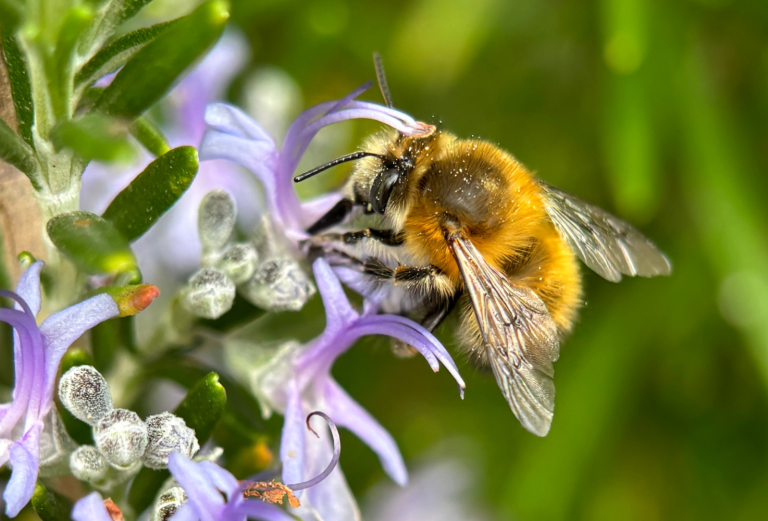
At the pond: plants & animals
The pond is full of life, from colourful plants to busy insects and amphibians. Together, they create a rich and balanced habitat where each species plays an important role.
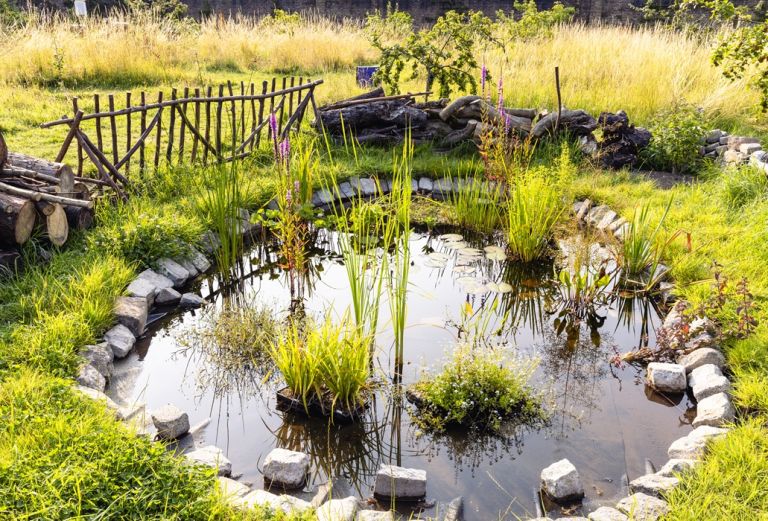
Plants at the pond
Plants are at the heart of the pond’s ecosystem. They provide oxygen, shade and shelter, as well as food for insects and amphibians. Some grow beneath the water, others float on the surface and many thrive around the edges in damp soil.
This list roughly groups the pond plants by when they provide their main ornamental interest, whether that is flowers, foliage, seed heads or evergreen structure. These timings are approximate, as nature and climate can vary from year to year.
This seasonal rhythm creates a planting scheme that changes throughout the year. From the bright flowers of marsh marigolds in spring, to vibrant lobelias and hemp agrimony in late summer and finally the sculptural shapes of reeds and sedges in winter, there is always something to see.
Spring
March to May
These are the first plants to wake up, bringing early colour and life to the pond. Fresh green leaves begin to emerge, followed by the first flowers of the year. This is an important time for pollinators and other wildlife starting to become active again.
- Caltha palustris – very early golden flowers
- Menyanthes trifoliata – spring flowers and fresh foliage
- Myosotis scorpioides – early blue flowers begin
- Ranunculus aquatilis – floating white flowers in spring
- Callitriche stagnalis – early fresh oxygenating growth
- Fontinalis antipyretica – evergreen mossy structure
- Nasturtium officinale – fresh edible foliage nearly year-round
- Acorus calamus – architectural foliage
- Alisma plantago-aquatica – foliage followed by airy flowers
- Iris pseudacorus – dramatic yellow flowers
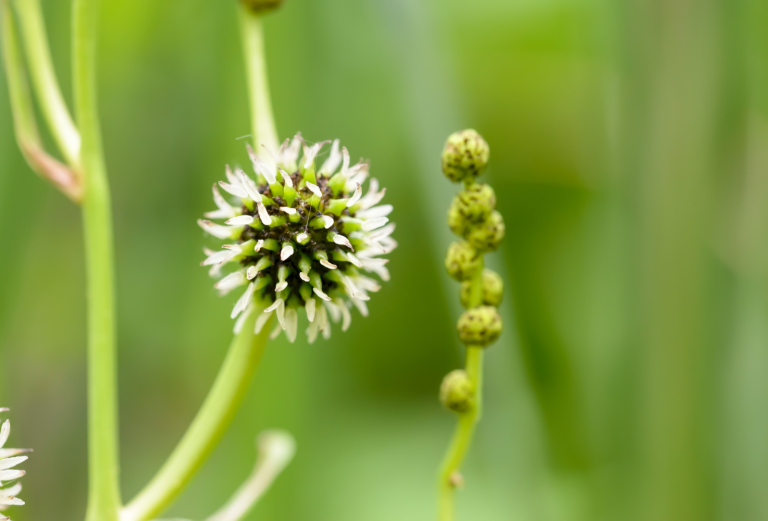
- Sagittaria sagittifolia – arrow-shaped foliage and flowers
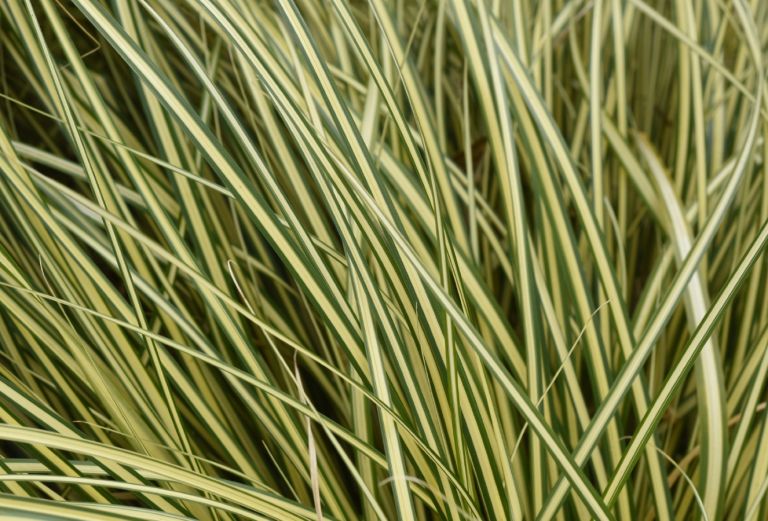
- Carex pseudocyperus – elegant sedge foliage
- Carex riparia – bold grassy structure
- Ranunculus flammula – small yellow flowers begin
Summer
June to September
This is the pond at its most vibrant! Many plants are in full flower, creating bold colours and attracting insects such as bees, butterflies and dragonflies. The dense growth also provides excellent shelter for pond life.
- Butomus umbellatus – striking pink umbels
- Nymphaea alba (H) – classic white waterlily flowers
- Persicaria amphibia – pink flower spikes
- Lythrum salicaria ‘Blush’ – long-lasting pale spikes
- Mentha aquatica – lilac flower heads and scent
- Sparganium erectum – distinctive seed heads develop
- Schoenoplectus lacustris – vertical reed structure
- Typha angustifolia – upright foliage and cigar heads
- Lobelia cardinalis ‘Queen Victoria’– vivid scarlet spikes and dark foliage
- Lobelia siphilitica – blue flower spikes
- Lobelia siphilitica f. albiflora ‘Alba’ – white flowers
- Eupatorium cannabinum – dusky pink pollinator flowers
- Lycopus europaeus – subtle but good wildlife interest
- Alisma plantago-aquatica – continued airy flowering
Autumn & winter
October to February
As temperatures drop, the focus shifts from flowers to structure. Seed heads, reeds and grasses add texture and shape, while some plants continue to oxygenate the water beneath the surface. These features also provide shelter for wildlife through the colder months.
- Typha angustifolia – winter silhouettes
- Schoenoplectus lacustris – persistent vertical stems
- Sparganium erectum – sculptural seed heads
- Carex riparia – winter texture
- Carex pseudocyperus – lingering foliage movement
- Ceratophyllum demersum – submerged oxygenator interest
- Fontinalis antipyretica – evergreen aquatic moss


What creatures can you spot at the pond?
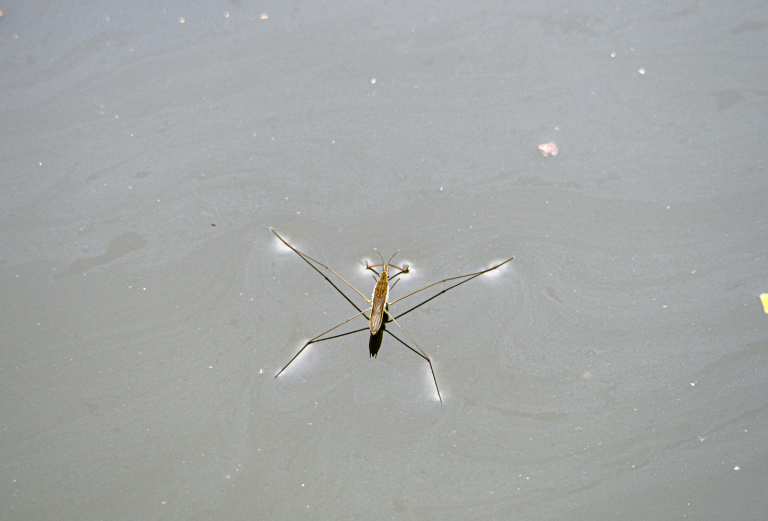
Even in a short visit, you might notice movement on the water, in the air and along the edges. Dragonflies and damselflies dart above the surface, while pond skaters glide across the water. Look more closely and you may spot water boatmen swimming below, or maybe a frog resting among the plants.
Ponds are one of the most important habitats for wildlife in the UK. They provide drinking water, shelter and breeding spaces for many species. As the pond continues to establish, even more creatures are expected to make it their home.
Spring
March to May
- mining bee (Andrena sp.)
- solitary bee (Anthophila sp.)
- honey bee (Apis mellifera)
- smooth newt (Lissotriton vulgaris)
- common frog (Rana temporaria)
- common toad (Bufo bufo)
- azure damselfly (Coenagrion puella)
- common blue damselfly (Enallagma cyathigerum)
- broad-bodied chaser dragonfly (Libellula depressa)
- large red damselfly (Pyrrhosoma nymphula)
- hoverfly species (Cheilosia sp.)
- water boatman (Corixidae sp.)
- pond skater (Gerris lacustris)
- robin (Erithacus rubecula)
- wagtail (Motacilla alba)
- crow (Corvus coron)
- southern hawker (Aeshna cyanea)
- emperor dragonfly (Anax imperator)
Summer
June to September
- emperor dragonfly (Anax imperator)
- southern hawker (Aeshna cyanea)
- broad-bodied chaser dragonfly (Libellula depressa)
- azure damselfly (Coenagrion puella)
- common blue damselfly (Enallagma cyathigerum)
- hoverfly larvae (Syrphidae sp.)
- soldier fly larvae (Stratiomyidae sp.)
- honey bee (Apis mellifera)
- solitary bee (Anthophila)
- mining bee (Andrena sp.)
- smooth newt (Lissotriton vulgaris)
- mandarin duck (Aix galericulata)
- wagtail (Motacilla alba)
- robin (Erithacus rubecula)
- crow (Corvus corone)
- water boatman (Corixidae sp.)
- pond skater (Gerris lacustris)
Autumn & winter
October to February
- southern hawker (Aeshna cyanea)
- emperor dragonfly (Anax imperator)
- water boatman (Corixidae sp.)
- pond skater (Gerris lacustris)
- robin (Erithacus rubecula)
- wagtail (Motacilla alba)
- crow (Corvus corone)