Written by photography volunteer Vida Saunders.
While taking photos in the gorgeous grounds of Fulham Palace recently, I stumbled across a bizarre botanical mystery.
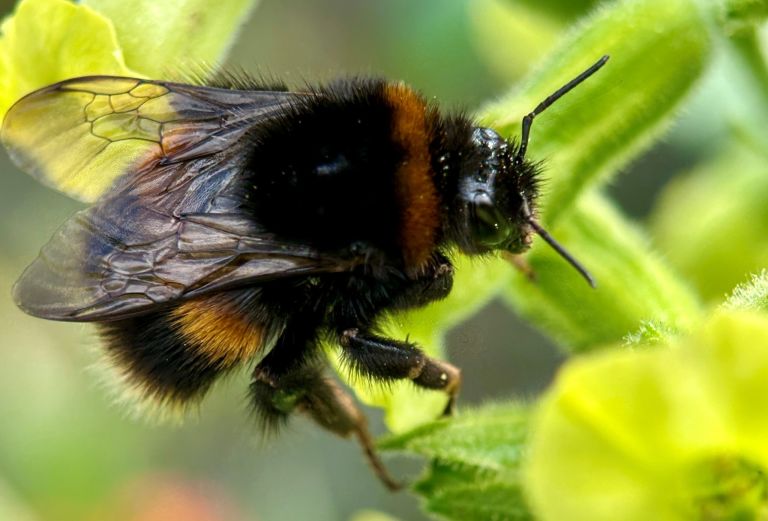
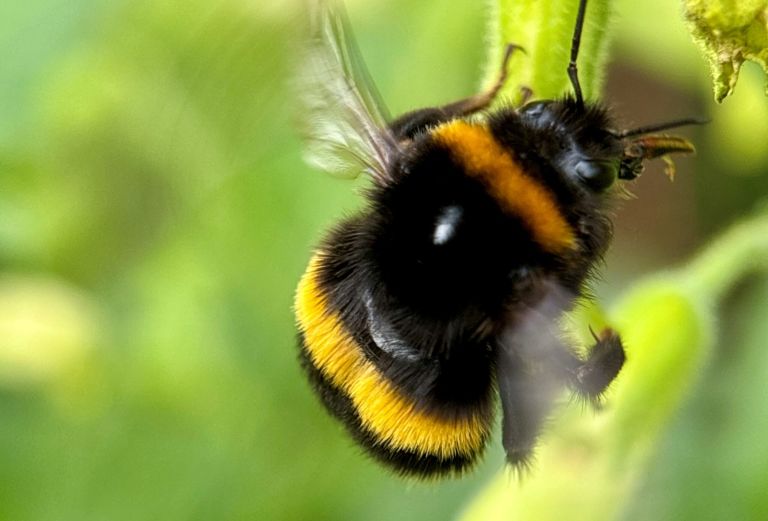
The garden’s flower borders were alive with a healthy mix of butterflies, hoverflies, bees and beetles. But when I focused my lens on the wild tobacco plants (Nicotiana rustica), the scene changed entirely.
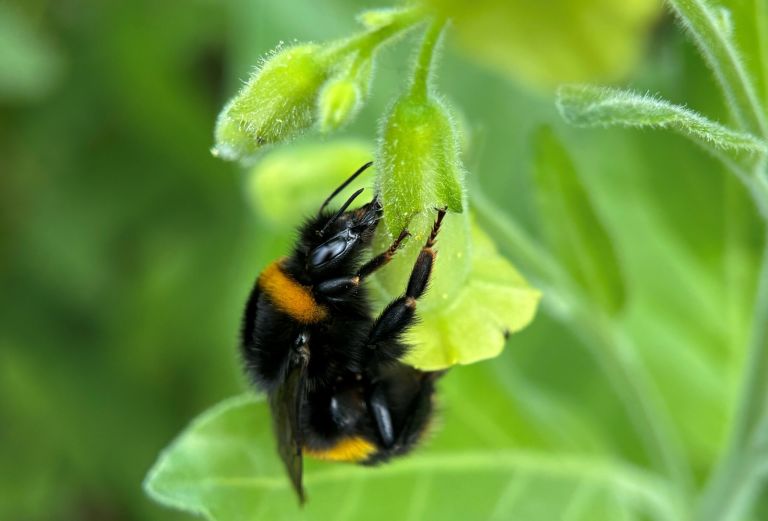
These plants were absolute magnets for bumblebees—and only bumblebees. No other insect would go near them. The bees weren’t just foraging; they seemed frantic, entirely ignoring nearby blooms. Intrigued by this stark divide, I did some digging into the science. As it turns out, I hadn’t just caught a unique photo opportunity—I had witnessed a masterclass in evolutionary mind control.
Nature’s drug dealers
We like to think of pollination as an honest exchange: the bee gets sweet nectar, and the flower gets pollinated. Tobacco plants play a much cleverer game. They spike their floral nectar with nicotine.
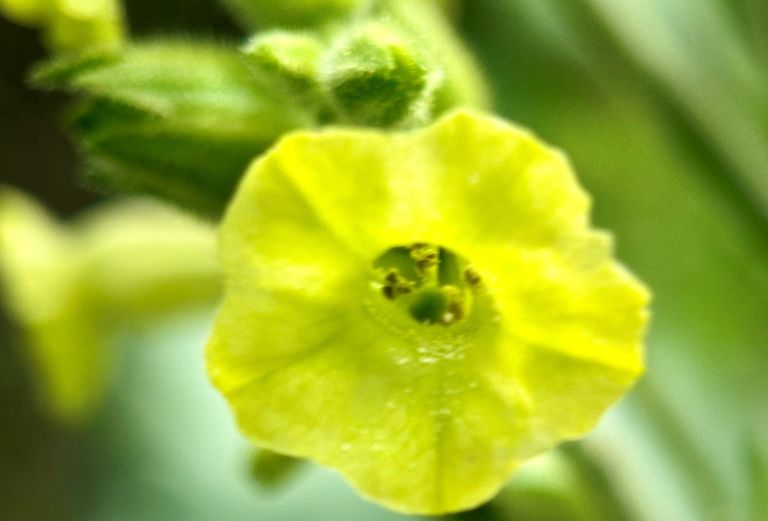
While tobacco plants use heavy doses of nicotine in their leaves as a toxic defence against being eaten, the micro-doses in their flowers serve a completely different purpose. They manipulate the pollinator’s brain.
To understand exactly how this works, I looked into the research of Professor Lars Chittka from Queen Mary University of London’s School of Biological and Chemical Sciences. He describes this hidden chemical warfare perfectly.
Flowers typically reward pollinators ‘honestly’ with rewards such as sweet nectar, but nature’s trick box is endlessly resourceful: some plant species gain an unfair advantage over competing species by spiking their nectar with addictive substances, such as nicotine in tobacco flowers.
Here we find that bees not only remember such flowers better but even keep coming back for more when these flowers are demonstrably poorer options, as if they were truly hooked on these flowers.
Professor Lars Chittka, Queen Mary University of London’s School of Biological and Chemical Sciences
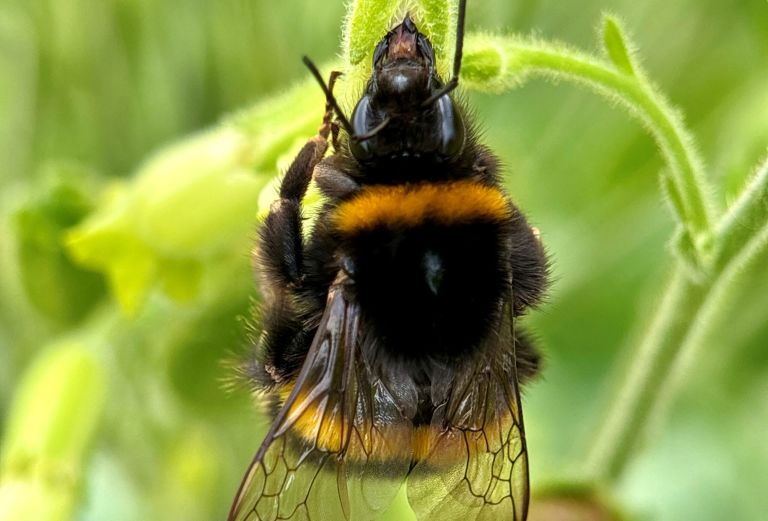
The science of the ‘buzz’
Professor Chittka’s research reveals that nicotine acts as a reward-system hack that rewires the bumblebee’s brain in a few extraordinary ways:
- Supercharged memory: It accelerates how fast they learn and retain the specific colour and scent of tobacco flowers.
- The sweetness illusion: It tricks the bees’ reward pathways, making mediocre, low-sugar nectar perceive as a high-quality feast.
- Tunnel vision: It induces strong ‘flower constancy,’ causing hooked bees to repeatedly return to empty tobacco flowers even when better options are nearby.
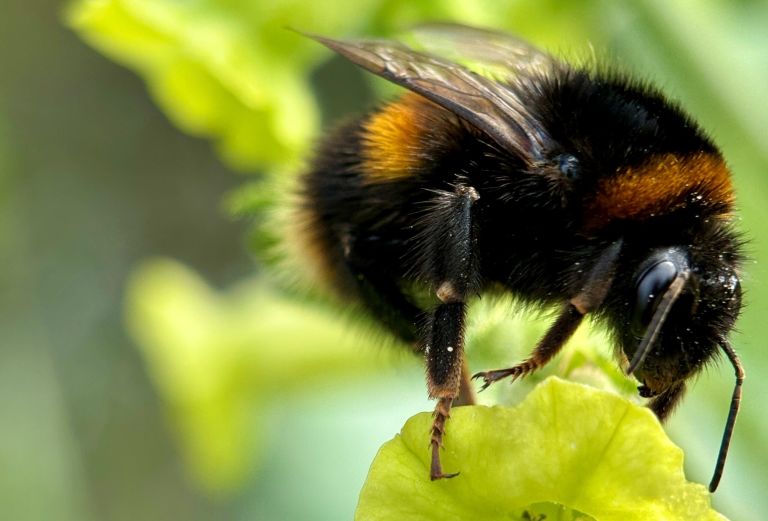
A short-term pharmacy?
But why were only bumblebees on these plants? It turns out, they might actually be self-medicating.
Bumblebees are frequently plagued by a common gut parasite (Crithidia bombi). Studies have shown that when infected bumblebees consume nicotine, it can reduce their parasite load by up to 81%. While the toxin repels other insects, bumblebees have turned this clever botanical trap into their own local pharmacy.
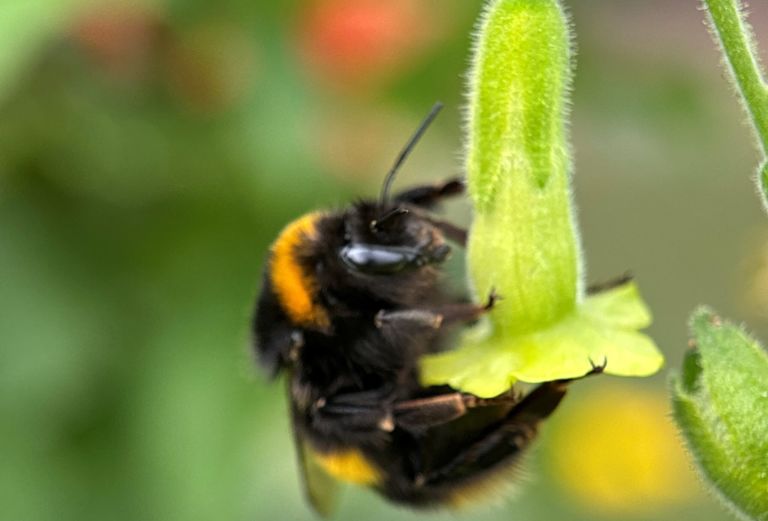
Next time you visit the Fulham Palace garden, keep an eye on the tobacco plants. You aren’t just watching nature at work—you’re witnessing a biological heist where the plants hold all the control.