By garden apprentice Ellis Lewis
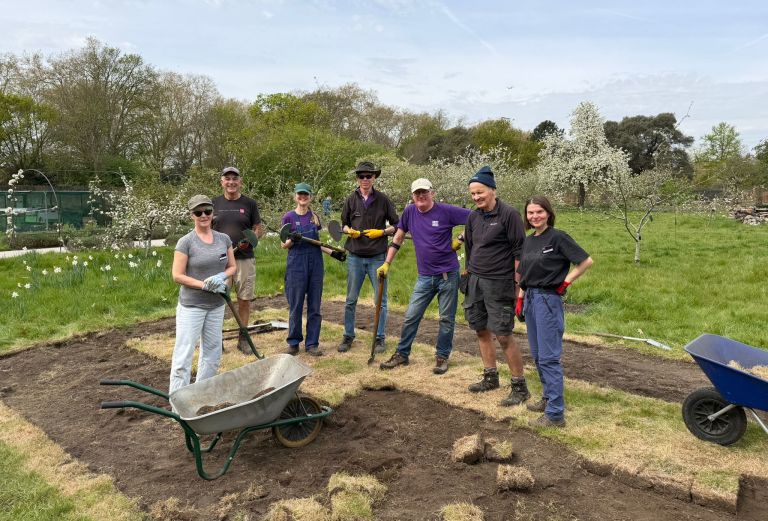
Recently, the garden team decided that we needed more growing space for vegetables, fruit and flowers – and of course, potatoes! In the orchard quadrant of the walled garden, near the south gate, we identified an area of long grass that could be transformed into productive growing space. After marking out the new bed, we mowed the grass short and began the process of lifting the turf.
To remove the turf, we used a half-moon edging tool to cut neat squares of turf, or sods, which were then lifted using a turfing iron. Rather than wasting these, we stacked them grass to grass and root to root in an out of sight area where they will break down naturally into loam. This creates a valuable resource for the garden, as the loam is later sieved and reused as a substrate in our potting mixes throughout the season. It is a simple but effective example of how we try to make the most of everything we produce on site.

While we were lifting the turf, our cockerel, Bonner, enthusiastically joined in. Chickens are very good at finding the invertebrates disturbed by our work and seeds found in the natural soil bank – these morsels are a vital part of the diet that keeps our flock healthy and happy. Bonner may also have added a small amount of fertiliser while he explored, which is a reminder of how organic gardening systems work. Our wonderful chicken volunteer regularly takes the flock out for morning walks around the garden, where they naturally contribute to soil health in a much more environmentally friendly way then one might have thought.
After removing the turf, we raked over the exposed soil to create a healthy tilth. This year, the new plot will be used for our maincrop potatoes, a strategic first crop for newly prepared ground. Potatoes are particularly useful for improving soil structure because their vigorous tubular root systems help to break up compacted soil, improving aeration and drainage. As the tubers swell beneath the surface they naturally loosen heavy ground. When they are lifted later in the season this leaves behind a more useable soil that is easier to work with for future growing. Our potatoes will also be available to purchase from our market barrow later in the year so please keep your eyes peeled!

Once the potatoes have been harvested, we plan to mulch the bed using our home-made mulch, which will further improve soil structure by increasing organic matter, supporting beneficial soil organisms and helping the soil retain moisture.
Looking further ahead, our long-term plan for this area is to install an improved fruit cage, which will complement the orchard quadrant’s fruity theme and create even more productive growing space for years to come.
